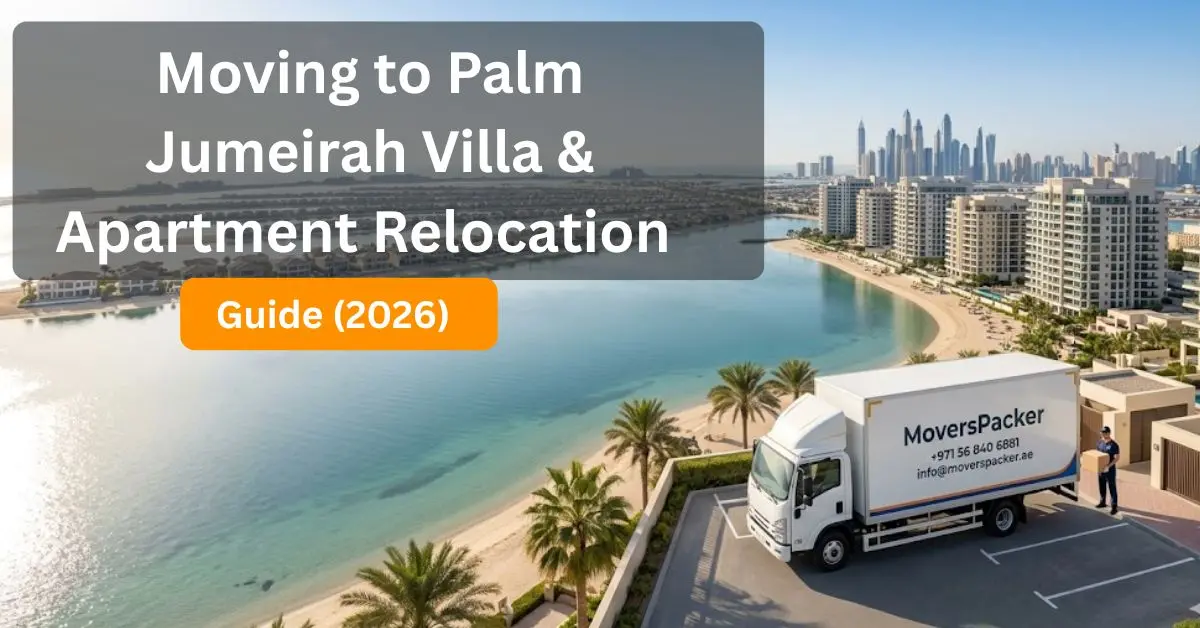
Moving to Palm Jumeirah requires careful planning due to its premium location, access routes, and strict community guidelines for villa and apartment relocations. Start by scheduling your move in advance, as access to the island is controlled and peak traffic hours can delay moving trucks.
If you’re relocating to a villa, ensure proper permits are arranged with community management, especially for large vehicles and furniture handling. Apartment moves often require booking service elevators and specific time slots to avoid disruption to residents.
Packing should be done professionally to protect high-value items, as many homes in Palm Jumeirah feature luxury interiors that can be easily damaged. It’s also important to work with experienced movers familiar with the area, as they understand parking restrictions, security checks, and building policies.
Utility setup, including DEWA, internet, and cooling systems, should be arranged before moving day to ensure a smooth transition. Additionally, consider unpacking and furniture assembly services to settle in quickly without stress.
Overall, a well-organized move with the right team ensures a seamless relocation experience, allowing you to enjoy the upscale lifestyle and waterfront living Palm Jumeirah is known for without unnecessary delays or complications.
This guide explains everything in simple words so anyone can understand how relocation works in Palm Jumeirah.
What Makes Palm Jumeirah Different for Moving?
Palm Jumeirah is one of the most unique residential areas in Dubai. It is built on a palm-shaped island and connected to the mainland through a single access road.
According to Dubai real estate movement patterns, most delays in island relocations happen due to traffic control and permit issues rather than packing problems.
Main reasons moving is different here:
- Only one entry and exit route.
- Security checkpoints at every stage.
- Frond-based villa structure.
- Limited truck movement during peak hours.
- Mandatory approvals from community management.
Even a small mistake in documentation or timing can delay the entire move.

Understanding the Layout Before You Move
To move successfully, you must first understand how the island is structured.
The Trunk
The trunk is the central road of Palm Jumeirah. Most apartment buildings and retail spaces are located here.
Important residential buildings include:
- Golden Mile Galleria
- Shoreline Apartments
- Tiara Residences
These buildings have loading bays, but only one truck can usually use the area at a time, which can slow down operations during busy hours.
The Fronds (Villa Area)
The fronds are private residential branches of the island. Each frond contains villas that face either the sea or the skyline.
There are three main villa types:
- Garden Homes.
- Signature Villas.
- Beachfront Villas.
Each type has different access challenges depending on distance from the main road and walking distance to the villa entrance.

The Crescent
The crescent is the outer curve of the island where luxury hotels and resorts are located.
Key landmarks include:
- Atlantis The Palm
- Atlantis The Royal
Traffic in this area can also affect moving schedules, especially during weekends and tourist seasons.
Moving Rules You Must Follow
All moves in Palm Jumeirah are controlled by community management and security authorities.
The main authority is Nakheel.
Required documents include:
- Emirates ID.
- Tenancy contract or ownership proof.
- Move-in request form.
- Vehicle registration details.
- NOC approval from management.
Without approval, moving trucks are often denied entry at the gate. Roofing access or related service work may also require prior authorization depending on the type of property and community rules.
Best Time to Move in Palm Jumeirah
Timing plays a very important role in relocation success.
Peak traffic times:
- Morning: 7:00 AM to 9:30 AM.
- Evening: 5:00 PM to 8:00 PM.
During these hours, access to the island becomes slow due to high commuter traffic.
Best moving time:
- 9:30 AM to 4:00 PM
This time window reduces waiting time and improves access to fronds and buildings.
Apartment Moving Process (Step-by-Step)
Apartments moving in Palm Jumeirah follow strict building rules.
Step 1: Obtain approval from building management.
Step 2: Book the service elevator in advance.
Step 3: Pack furniture carefully to protect against damage.
Step 4: Use approved loading bays only.
Step 5: Complete the move within allowed time slots.
If any step is missed, the move can be delayed or stopped.
Villa Moving Process (Fronds)
Villa moving is more complex compared to apartments.
Main challenges include:
- Distance from truck parking to villa entrance.
- Narrow internal roads on fronds.
- Restrictions on heavy vehicles during peak hours.
Villa types:
Garden Homes
Medium-sized villas with easier access and shorter moving times.
Signature Villas
Large luxury homes that often require multiple trucks and extended moving time.
Beachfront Villas
Properties with direct beach access that may require special handling for outdoor furniture.
How Much Does Moving Cost in Palm Jumeirah?
Moving costs vary based on property size and service requirements.
Average cost ranges:
- Studio apartment: AED 800 to AED 1,500
- 1–2 bedroom apartment: AED 1,500 to AED 3,000
- Garden Home villa: AED 5,000 to AED 8,000
- Signature Villa: AED 8,000 to AED 15,000
Higher costs are due to:
- Permit processing
- Security clearance
- Long walking distances
- Special handling for luxury furniture
Common Problems During Moving
Most relocation issues happen due to lack of planning.
Common problems include:
- Delay in permit approval.
- Wrong truck size selection.
- Traffic congestion at the trunk.
- Missing elevator booking.
- Security rejection at entry points.
Most of these issues are avoidable with proper preparation.
Related: Moving to Dubai Silicon Oasis Cost, Process and What to Know?
Apartment vs Villa Moving Comparison
| Feature | Apartments | Villas |
| Permit Required | Yes | Yes |
| Elevator Booking | Required | Not required |
| Access Difficulty | Medium | High |
| Moving Time | 4–8 hours | 1–2 days |
| Truck Size | Small/Medium | Medium/Large |
Expert Moving Tips
- Apply for permits at least 48 hours in advance.
- Avoid peak traffic hours.
- Label boxes according to rooms.
- Use moisture protection near coastal areas.
- Confirm truck size before booking.
- Inspect access routes before moving day.

Humidity near the sea can damage wooden furniture and electronics if not properly protected.
Real Moving Example
A 5-bedroom villa relocation from Dubai Hills to Palm Jumeirah was completed in one full day.
The operation included:
- Two 7-ton trucks
- Six packing staff
- One pre-packing day
Due to frond access limitations, furniture had to be carried more than 20 meters from truck to villa entrance. Careful planning ensured same-day completion.
Frequently Asked Questions
Do I need a permit to move to Palm Jumeirah?
Yes, all moves require approval from Nakheel and building management.
How long does approval take?
Usually between 24 to 72 hours depending on the building.
Can I move on weekends?
Some buildings restrict weekend moving or limit time slots.
What happens if I do not get approval?
Trucks can be stopped at the security gate.
How long does a villa move take?
Small villas take one day, while larger villas can take up to two days.
Conclusion
Moving to Palm Jumeirah requires planning, documentation, and proper timing. It is not a standard residential move because of its island structure and strict access rules.
Understanding the layout, permit system, and cost structure helps reduce delays and avoid unnecessary issues. Whether moving into an apartment on the trunk or a villa on a frond, proper preparation ensures a smooth relocation process.