Use furniture blankets, stretch wrap, corner protectors, and proper disassembly. That’s the short answer to how to pack furniture for moving in the UAE. But doing it right in the UAE’s unique environment takes more than wrapping a sofa in bubble wrap and hoping for the best.
The UAE presents moving challenges you won’t find anywhere else: extreme summer heat that softens adhesives and warps wood, sandy air that works into joints and scratches surfaces during transport, and a mix of high-rise apartments and sprawling villas that demand different packing strategies.
This guide breaks down professional-grade techniques used by experienced movers across Dubai, Abu Dhabi, and Sharjah. So, your furniture arrives exactly as it left.
Why Packing Furniture in the UAE Is Different from Anywhere Else?
Most international packing guides assume temperate climates and short moves. The UAE is neither.
Temperatures regularly exceed 45°C in summer, and furniture sitting inside a moving truck even briefly can hit internal temperatures of 60–70°C. Real wood furniture expands. MDF panels (used in a huge portion of UAE-sold flat-pack furniture) can delaminate.
Leather softens and sticks. Glass contracts and then expands unevenly when moved from an air-conditioned apartment to a hot truck.
Then there’s the dust. UAE construction dust and fine desert sand are abrasive at a microscopic level. A single transport trip without proper wrapping can leave micro-scratches on lacquered surfaces that only become visible under direct lighting after it’s too late.
Professional movers operating in the UAE account for all of this. You should too. For expert handling, climate-conscious packing, and safe furniture transport solutions, many homeowners rely on Dubai Expert Furniture Services, while those looking for premium handcrafted interiors and tailored designs often choose Custom Furniture Dubai.
Essential Packing Materials for UAE Furniture Moves
Getting your materials right before you start is half the battle. Here’s what professional packing teams in the UAE actually use and why each item matters.
Furniture Blankets (Moving Pads)
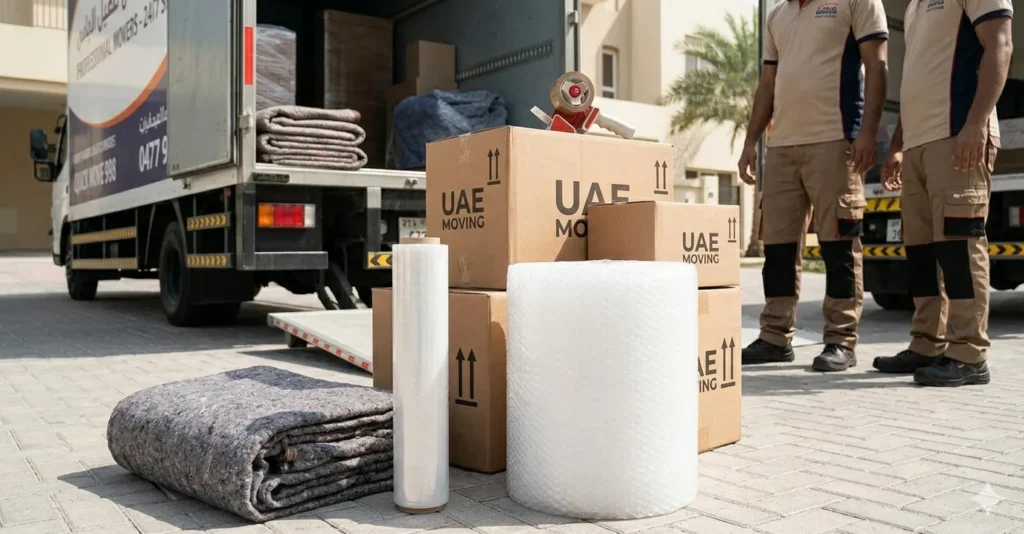
These thick, quilted pads are the backbone of professional furniture protection. Unlike bubble wrap, which traps heat against surfaces, furniture blankets absorb impact while allowing surfaces to breathe. For wooden furniture in the UAE heat, this matters enormously.
Wrap each large item like wardrobes, dining tables, bed frames fully in at least one furniture blanket, then secure with packing tape or stretch film over the blanket (never directly on the furniture surface).
Stretch Wrap / Shrink Film
Stretch wrap holds blankets in place and prevents dust infiltration. Professional movers apply it in overlapping spirals, starting from the bottom and working upward. Two to three layers is standard for anything going into outdoor or truck storage even temporarily.
Critical UAE tip: Use the thicker 25-micron stretch film rather than standard household cling film. The heat causes thinner films to contract and then lose elasticity quickly.
Corner and Edge Protectors
Foam corner protectors are non-negotiable for glass-topped tables, marble surfaces, and wooden furniture with exposed edges.
In high-rise buildings common across Dubai and Abu Dhabi, furniture passes through corridors, elevators, and tight doorways. One unprotected corner catching a wall can crack marble or chip lacquer.
Acid-Free Tissue Paper and Furniture Polish
Apply a thin layer of furniture polish to wood surfaces before wrapping. This creates a micro-barrier against humidity shifts and prevents the wrapping material from adhering to the surface in heat. Acid-free tissue paper placed between stacked items prevents surface transfer.
How to Pack Specific Types of Furniture for Moving in UAE?
Different furniture needs different approaches. Here’s a room-by-room, item-by-item guide.
Sofas and Upholstered Furniture
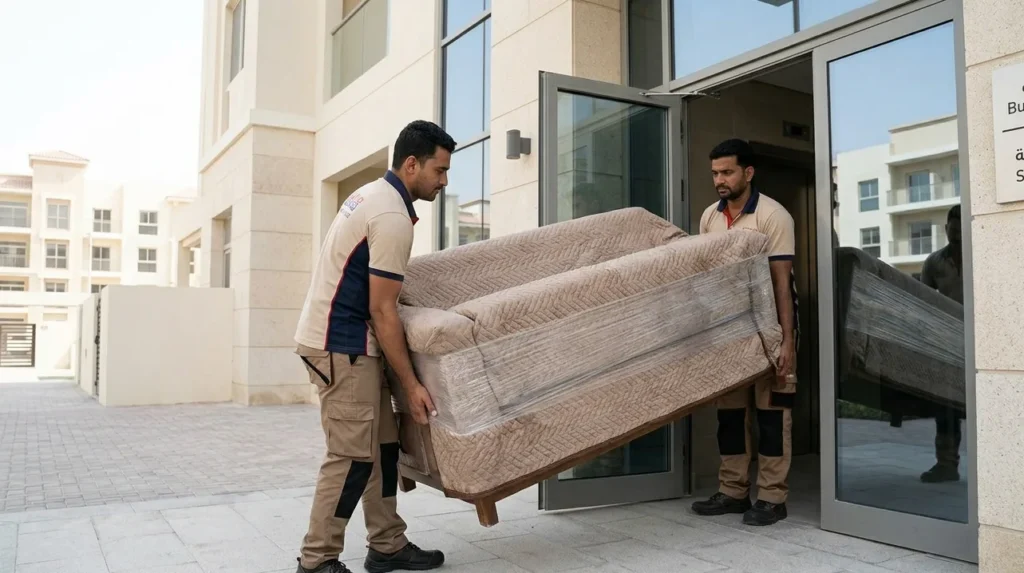
Remove cushions and pack them separately in large garbage bags or dedicated cushion covers. This keeps them clean and makes the sofa body easier to maneuver.
For the sofa frame itself, use stretch wrap to bind the legs close to the body (removing legs entirely is ideal if they are easily detachable). Then wrap the entire piece in furniture blankets. In the UAE, avoid storing upholstered items in non-air-conditioned trucks for more than 90 minutes in summer because the foam interior can begin to retain heat and develop an odor.
Wooden Furniture: Tables, Cabinets, and Wardrobes
Disassembly is king here. A six-door wardrobe transported as one unit through a UAE high-rise elevator is a recipe for damage, both to the furniture and to the building.
Remove all doors, drawers, and shelves. Label every piece with numbered masking tape (e.g., “Wardrobe A, Shelf 2”). Store screws and fixings in labelled zip lock bags, taped directly to the piece they belong to.
Wrap individual panels in furniture blankets. Stack panels vertically inside the truck, never flat and horizontal, which puts stress on joints and risks cracking under-weight.
Glass and Marble Surfaces
Glass tabletops and marble surfaces are among the most common casualties in UAE moves. The key rule: never transport glass or marble horizontally unless it’s a massive slab that can’t stand upright.
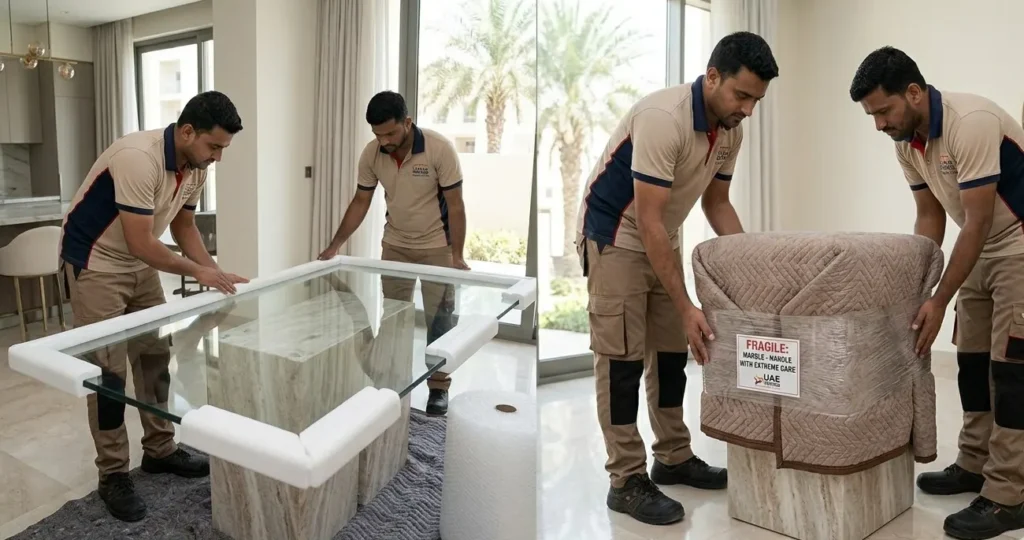
For glass tabletops, apply a large X of masking tape across the surface before wrapping. This holds any fragments in place if breakage occurs. Wrap in two layers of bubble wrap, then a furniture blanket. Transport vertically, secured against a padded wall of the truck.
For marble, the same vertical rule applies. Marble is heavy but more brittle than most people realize. Use foam edge protectors and never let marble pieces rest against each other without padding in between.
Beds and Mattresses
Disassemble bed frames completely. Mattresses require dedicated mattress bags, available from most UAE packing suppliers, to protect against dust, moisture, and the kind of handling damage that occurs when mattresses are carried across building lobbies.
For memory foam mattresses particularly, avoid rolling or bending during the move. The UAE heat makes memory foam temporarily more pliable, which can create permanent compression lines if folded incorrectly.
Electronics-Integrated Furniture
This is increasingly relevant in the UAE market, where entertainment units with built-in cable management, beds with USB charging ports, and smart desks are common.
Photograph all cable connections before disassembly. Use cable ties and label every cable. Wrap any integrated screens or display panels in anti-static bubble wrap specifically. Standard bubble wrap can build up static charge that damages screens.
Related: Packing Materials for Movers: What Professionals Actually Use?
Step by Step Professional Packing Process for Furniture Moving in UAE
Here’s the process professional moving teams follow in order.
Inventory and Photograph Everything
Before a single item is moved, photograph each piece of furniture from multiple angles. This is your insurance documentation and your reassembly guide. In the UAE, this is especially important if your move involves storage, where items may sit for weeks.
Disassemble Strategically
Work room by room. Disassemble in this order: bedroom furniture first (least used during the packing process), then living room, then kitchen. Keep the most essential items accessible until last.
Clean Before Packing
Dust and sand packed against furniture surfaces cause scratches during transport. Wipe all surfaces clean and dry before wrapping. In the UAE’s dusty environment, this step is often skipped and always regretted.
Apply Polish or Protective Coating
For wood and lacquered surfaces, a light application of protective polish before wrapping adds a meaningful layer of protection.
Wrap, Label, and Stack
Wrap each item as described above. Label everything, including both what it is and which room it goes to in the new property. Stack heavier items at the bottom of the truck with lighter, fragile items on top.
Secure Inside the Truck
Use ratchet straps to secure furniture groups inside the truck. Furniture should not be able to shift during transport. In the UAE, where road surfaces on construction sites or in new communities can be rough, unsecured furniture shifts and collides, which is how most transport damage actually happens.
Common Packing Mistakes UAE Movers Make and How to Avoid Them?
Using the wrong tape directly on furniture.
Standard packing tape applied directly to wood, fabric, or leather will damage the surface when removed, especially after heat exposure. Always tape over blankets or wrap, never on the furniture itself.
Underestimating UAE elevator dimensions.
Many UAE apartments, particularly older buildings in Deira, Al Barsha, and certain Abu Dhabi districts have elevators smaller than the furniture being moved. Measure your elevator and doorframes before packing day, not during it.
Ignoring the timing of the move
Moving furniture in the middle of a UAE summer afternoon is genuinely risky for both movers and materials. Professional teams in the UAE typically start outdoor moves by 6–7am and aim to finish external transport before 11am in summer months.
Packing everything in boxes without labelling sides
Boxes marked “fragile” mean nothing if they are stacked upside down. Mark boxes with “THIS SIDE UP” arrows and “FRAGILE” on all four sides, not just the top.
Forgetting to account for condensation
Moving from an air-conditioned apartment into a hot truck and back into air-conditioning creates condensation on surfaces. Furniture blankets absorb this; plastic wrap alone does not. This is a common cause of moisture damage on wood veneer furniture in UAE moves.
When To Hire Professional Furniture Packers in UAE?
DIY packing works well for smaller moves, such a studio apartment, a one bedroom, or a partial move. But for larger properties, specialist furniture (antiques, custom pieces, piano, large marble surfaces), or moves involving temporary storage, professional furniture packing services in UAE are genuinely worth the investment.
Professional movers bring the right equipment, including custom crating for high-value items, climate-managed trucks, and experienced teams who navigate UAE high-rises daily. They also carry the insurance coverage that makes any damage claim straightforward.
If you are moving to a three-bedroom villa or larger, the cost of one damaged piece of furniture typically exceeds what professional packing would have cost.
Conclusion: Pack Smart, Move Safe in the UAE
Knowing how to pack furniture for moving in UAE properly is the difference between a stress-free move and arriving at your new home to find damaged wardrobes, scratched tabletops, or cracked glass. The UAE’s climate, construction environment, and building types all require specific approaches that generic moving guides simply don’t address.
Use the right materials. Disassemble properly. Time your move intelligently. And when the job is bigger than a DIY project, work with a team that knows the UAE moving landscape inside out.
Ready to move without worry? Visit MoversPackers.ae to get a free quote from professional furniture packers and movers across Dubai, Abu Dhabi, and Sharjah. Your furniture deserves better than bubble wrap and hope.
